Toggle Nav 
search
shopping_cart ()
SUMMER SALE NOW ON
CLICK FOR LATEST OFFERS
Briefcase vs Attaché Case: Understanding the Difference
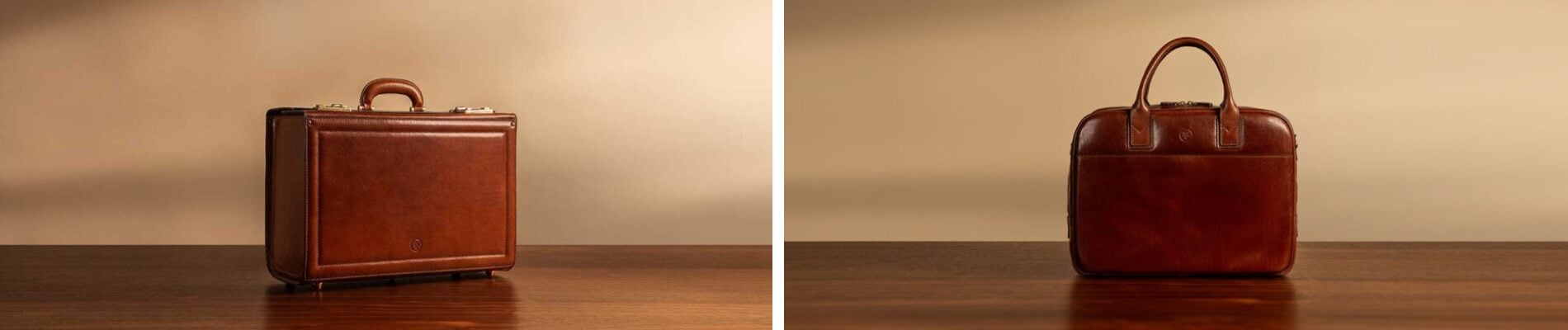
There are moments in a working life when small decisions carry quiet weight. The cut of a jacket. The finish of a shoe. The object placed beside you in a meeting. When comparing a briefcase vs attaché case, the differences may appear subtle at first glance; however, their character, structure and intention differ in meaningful ways.
Understanding that distinction is less about function alone and more about how you move through your day.
The Briefcase: Adaptable, Considered, Contemporary
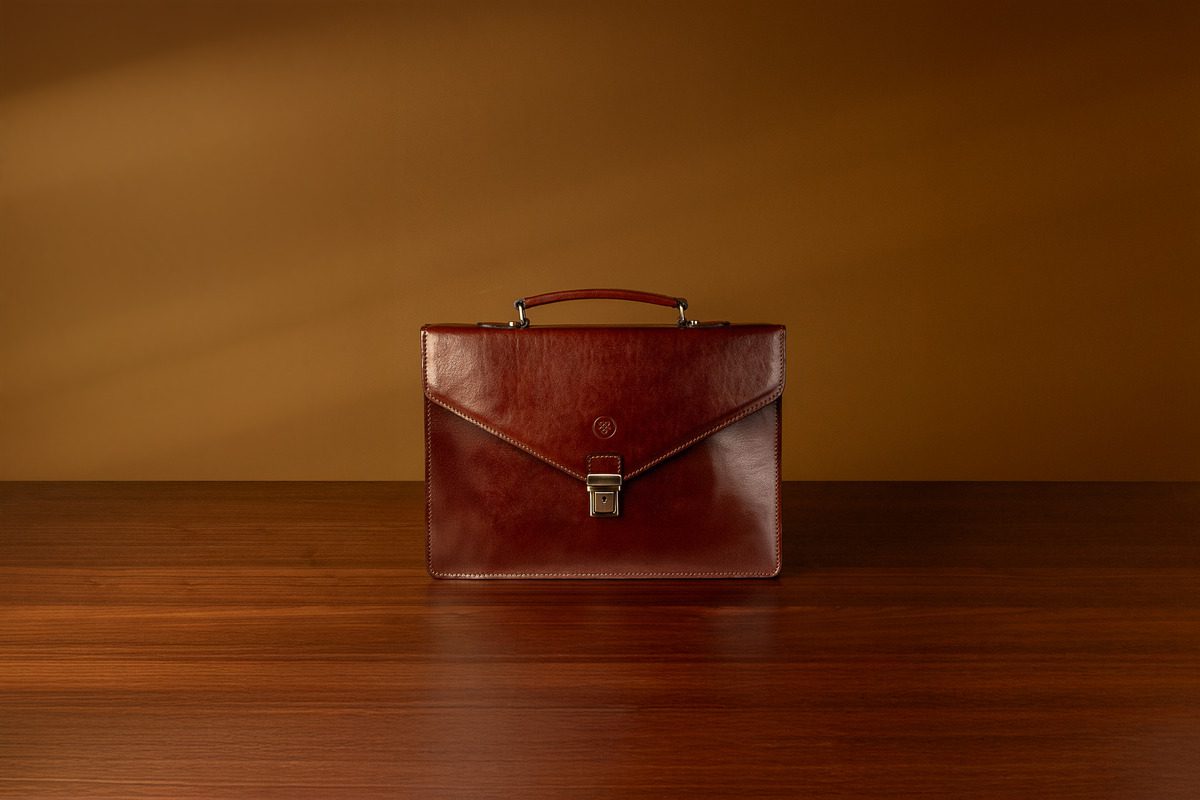
The briefcase has evolved alongside modern professional life. Whereas it was once a purely a vessel for documents, it now accommodates the realities of digital work — laptops, cables, notebooks and the quiet accumulation of daily essentials.
A well-made leather briefcase retains structure without rigidity. Its silhouette is defined yet flexible, allowing for expansion and ease of use. Internally, compartments bring order without excess, ensuring that the organisation feels intuitive rather than engineered.
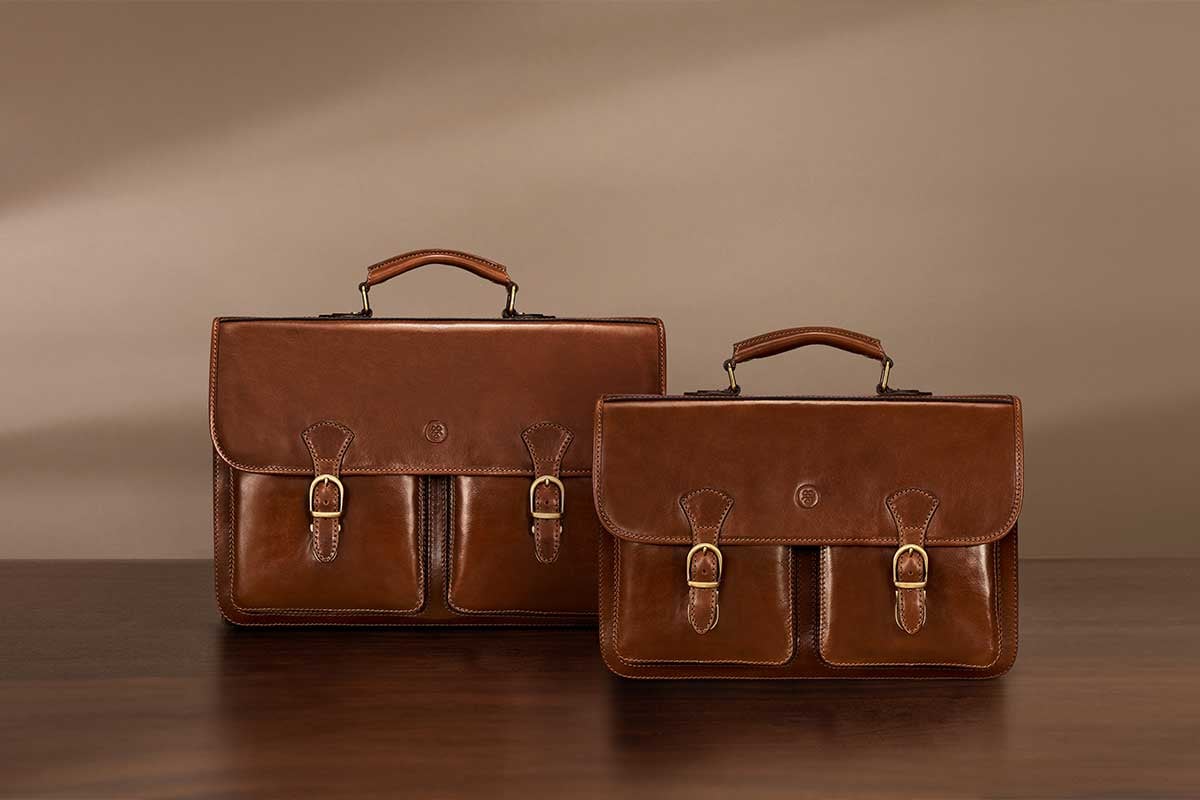
It is, in many ways, the natural companion to a dynamic working rhythm: commutes, travel, shared workspaces, and days that extend beyond the boardroom.
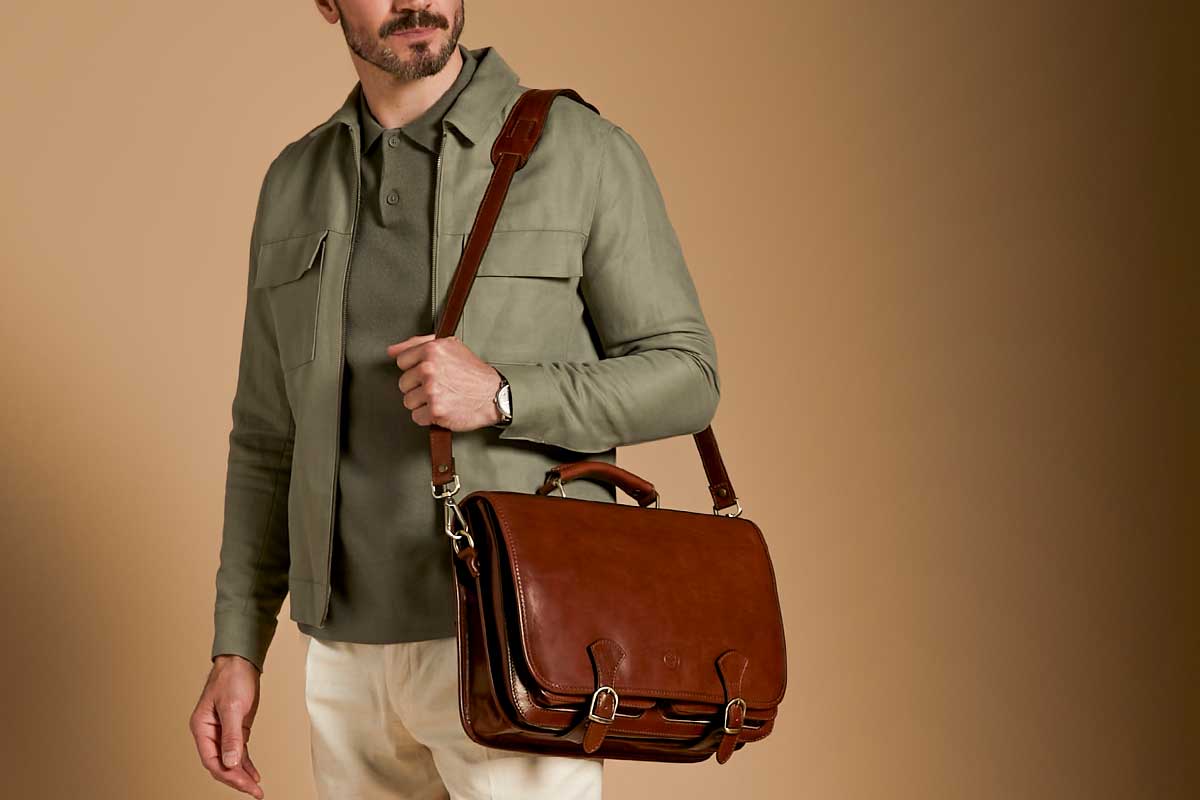
Carried by hand or over the shoulder, the briefcase reflects adaptability. It suggests preparedness without formality, refinement without display.
Within the wider landscape of professional leather goods, the briefcase has become a symbol of modern versatility, structured enough to feel composed whilst accommodating enough to feel effortless.
The Attaché Case: Precise, Structured, Intentional
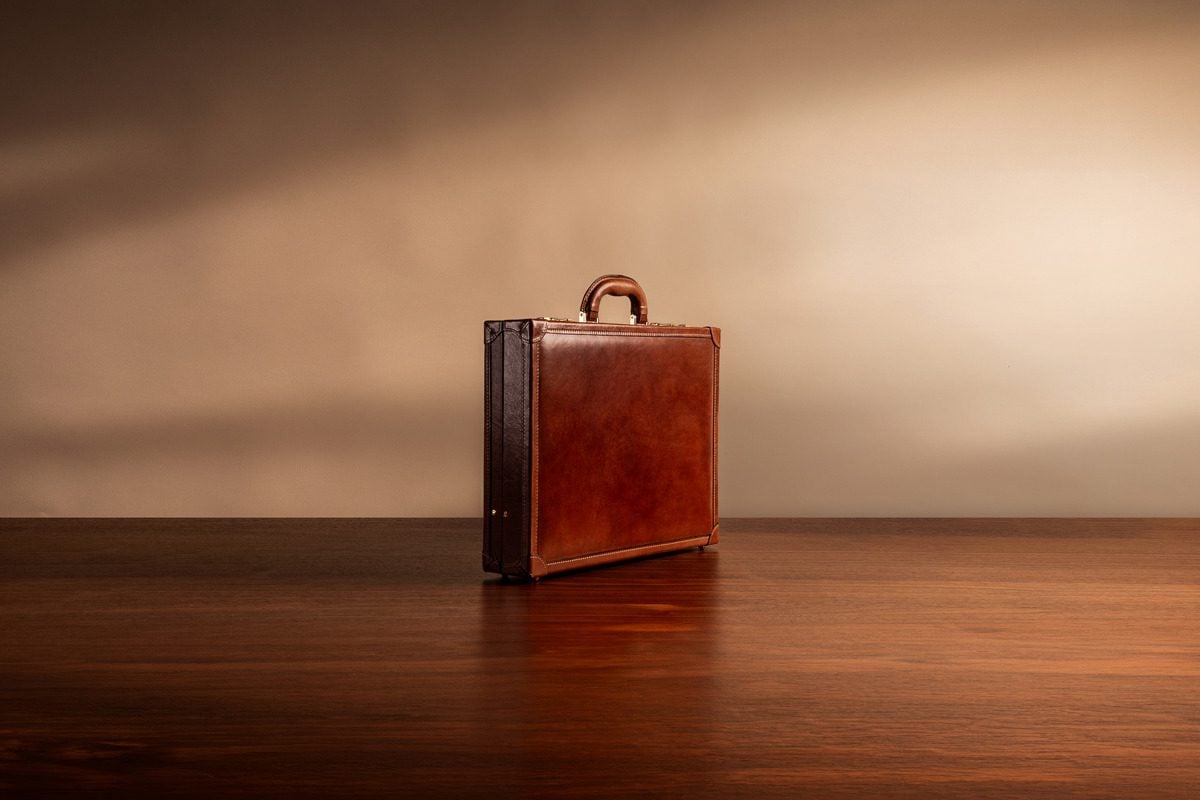
The attaché case tells a different story. Its origins lie in diplomacy and legal practice, where documents required not only carriage but protection. Defined by a rigid frame and box-like construction, the attaché offers clarity of form and authority of presence.
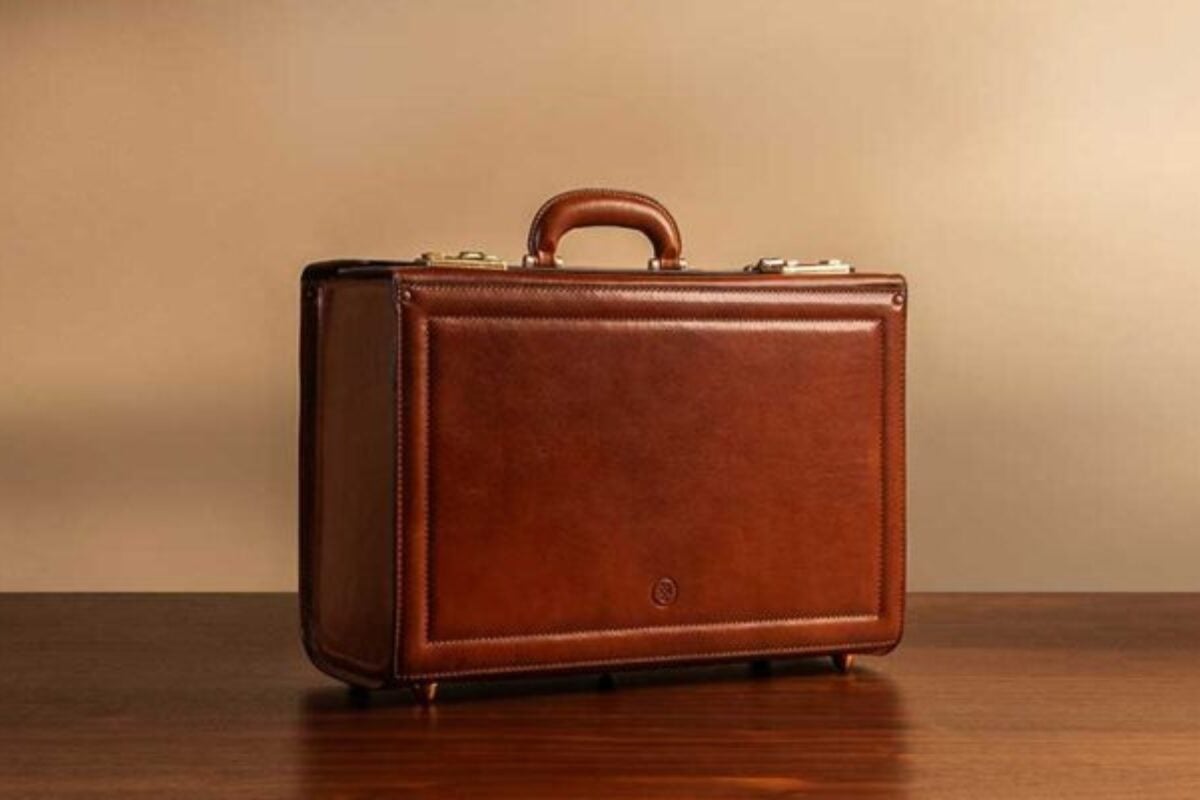
Unlike the more accommodating briefcase, an attaché case encourages restraint. Its interior is streamlined. Papers remain flat. Devices are chosen carefully. What is carried is deliberate.
Often secured with metal closures or combination locks, the attaché speaks of tradition and precision. It is less concerned with adaptability and more with presentation.
Placed on a table before a meeting begins, it communicates structure. It implies that what lies within has been prepared with care.
A Difference of Movement
The distinction between a briefcase and an attaché case becomes most apparent in motion.
A briefcase moves with you across platforms, through airports, between meetings and home. Its design accommodates the fluidity of contemporary work.
An attaché, by contrast, is purposeful in its stillness. It travels, certainly, but it does not expand or bend to accommodate unpredictability. It protects, preserves, and maintains order.
Neither is superior. Each reflects a different professional rhythm.
Material as the Constant
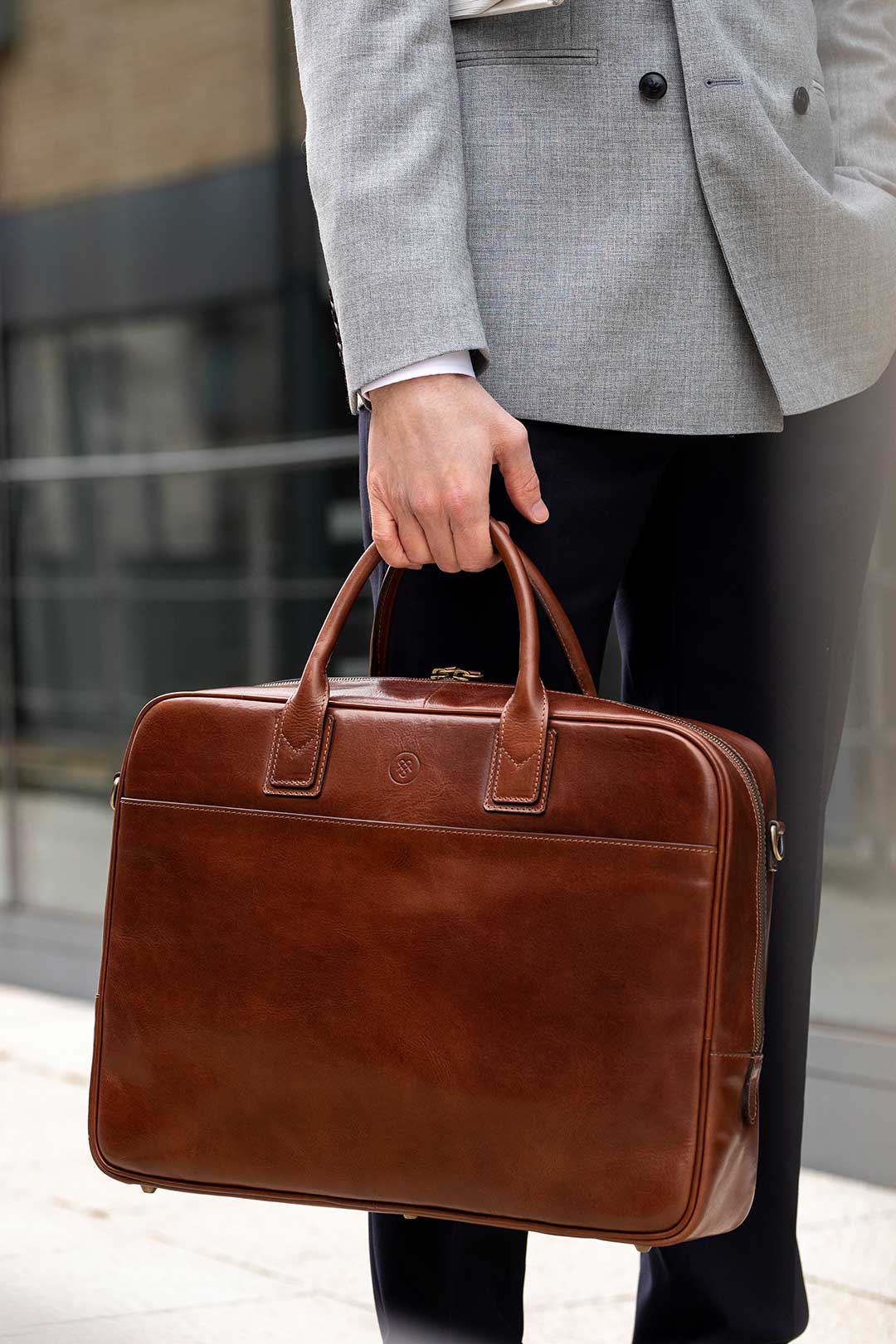
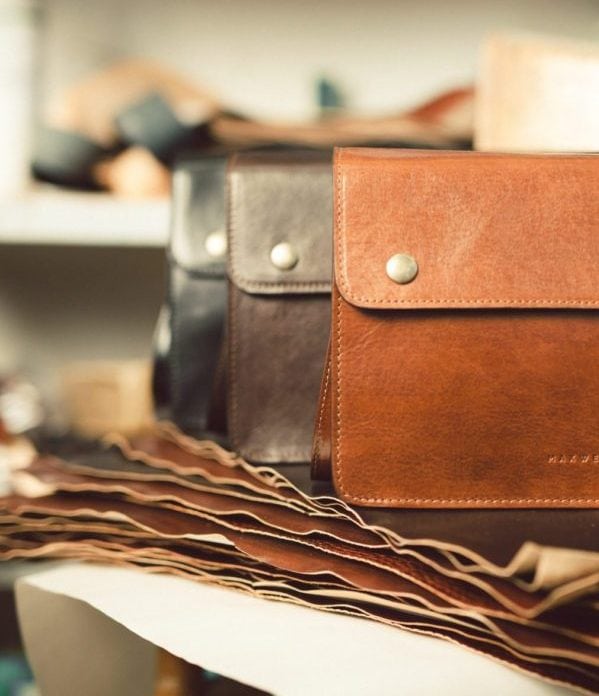
What unites both styles is material. When crafted from full-grain, vegetable-tanned leather, either form develops depth over time. The surface softens, tone deepens, and a subtle patina emerges, not as wear, but as evidence of use.
Longevity is where both the briefcase and the attaché case find common ground. Their distinction lies not in quality, but in posture.
Choosing Between Structure and Versatility
The choice between a briefcase and an attaché case is rarely about capacity alone. It is about how you prefer to carry responsibility.
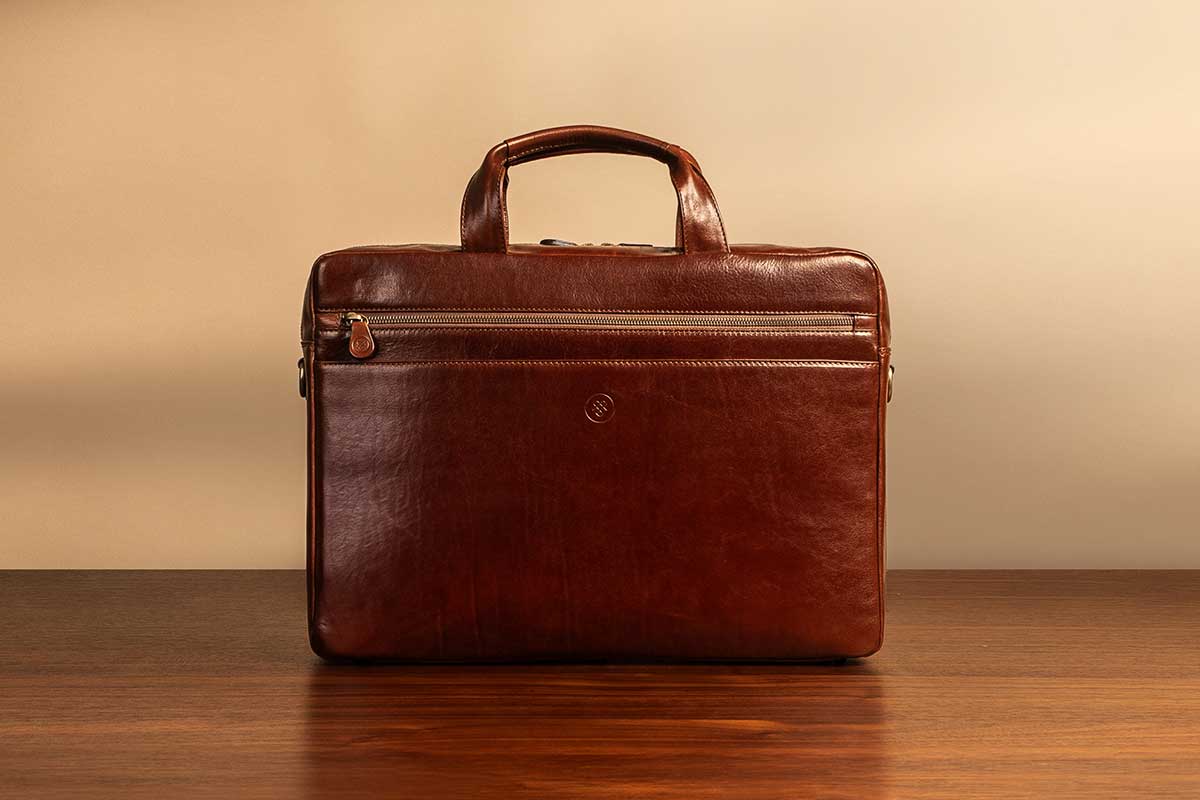
Those whose days demand adaptability often favour the briefcase, a silhouette that accommodates modern tools without compromising on restraint. Those drawn to structure and clarity may prefer the attaché, an object that prioritises protection, order and presence.
For a broader understanding of how these forms sit within modern professional design, our leather briefcase guide explores the evolution of both silhouettes and the craftsmanship behind them.
Today, both formats continue to exist side by side within our collections, from contemporary leather briefcases designed for fluid working lives to structured attaché cases that maintain a more formal presence.
Ultimately, when choosing between a briefcase vs attaché case, the right decision reflects not what you carry, but how you work.