Toggle Nav 
search
shopping_cart ()
SUMMER SALE NOW ON
CLICK FOR LATEST OFFERS
Precision, Craft & the Art of Finishing Fine Leather
The leather embossing process is one of the purest stages in leather craftsmanship, forming part of the broader journey outlined in our leather craftsmanship, and a subtle finishing technique that elevates fine materials into unmistakable luxury. Although it may appear simple, artisans executing leather embossing must apply exceptional skill, patience, and technical precision.
At Maxwell-Scott, embossing forms part of our leather craftsmanship philosophy and reflects the meticulous standards we apply to our luxury leathers. Furthermore, artisans execute every mark, alignment, and impression with care, ensuring each piece carries an understated signature of quality.
What Is Leather Embossing?
Leather embossing is the process of imprinting a design, logo, or pattern into the leather using heat and pressure. Far from being a decorative excess, embossing serves as a mark of identity, heritage, and craftsmanship.
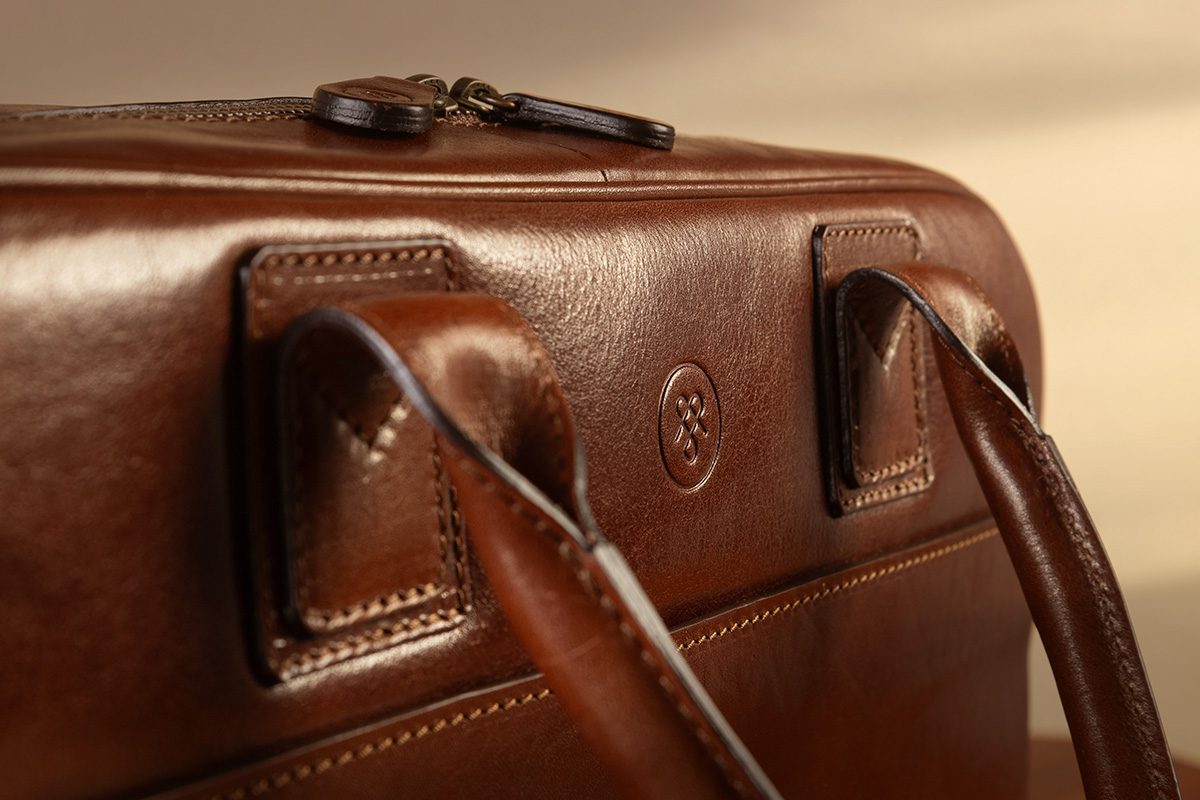
The finest embossing is achieved through blind embossing, where the design is pressed directly into the leather without the addition of metallic foil. This creates a subtle, tone-on-tone impression that enhances texture while preserving the natural beauty of the hide.
When executed correctly, embossing becomes a permanent part of the leather, refined, elegant, and enduring.
Why Embossing Is a Craft, Not a Machine Setting
However, in mass production, manufacturers often treat embossing as a mechanical function. In fine leathercraft, it is a skilled discipline that demands a deep understanding of leather behaviour.
Therefore, every hide responds differently to heat and pressure. Variables such as
All of the above influence how leather accepts an embossed impression.
Moreover, our master artisans adjust temperature, pressure, and timing by hand, ensuring each piece receives a clean, crisp imprint without compressing or damaging the leather’s natural fibres.
Consequently, his level of precision reflects the expertise of our Italian Leather craftsman, whose experience transforms technique into artistry.
The Traditional Embossing Process: Step by Step
1 — Leather Preparation
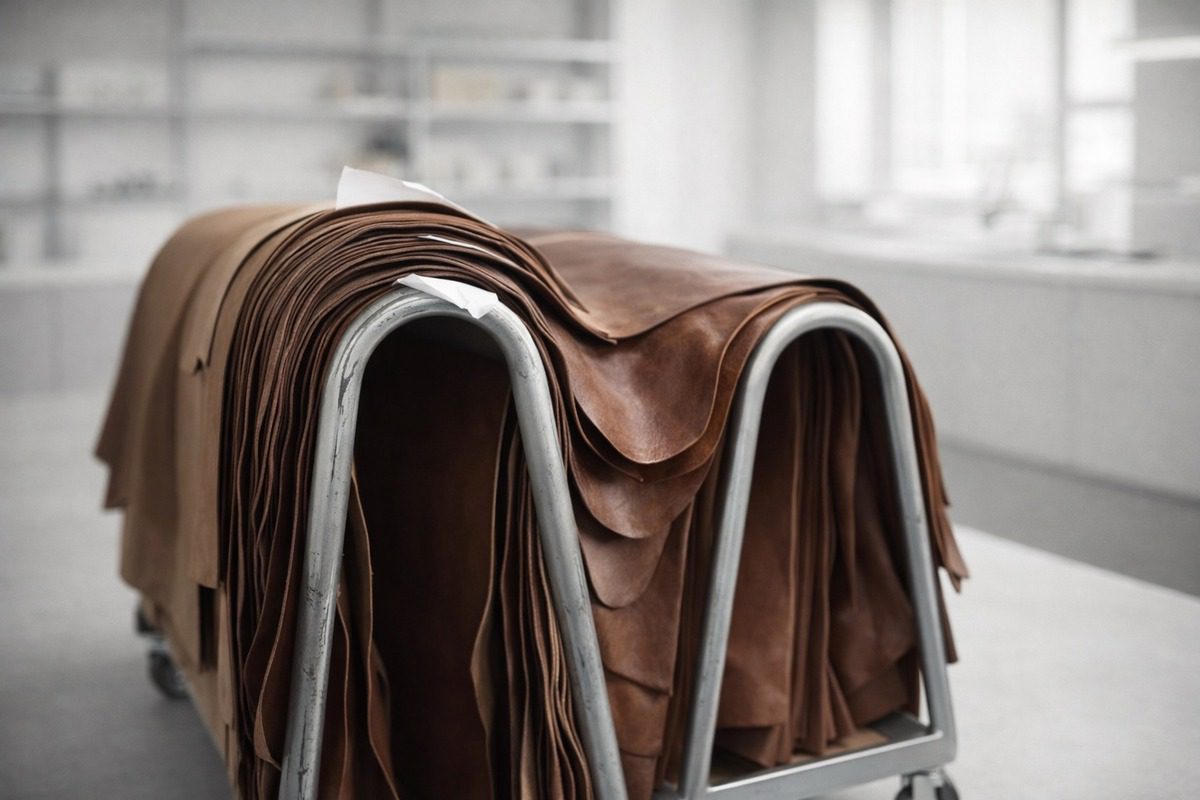
Before embossing begins, each hide is carefully inspected and prepared. Additionally, only full-grain leather, vegetable-tanned using our traditional 60-day tanning process, is selected for embossing. This ensures the fibres remain open, responsive, and capable of holding a permanent impression.
2 — Heat Calibration
Then, the embossing plates are heated to precise temperatures, carefully calibrated for each leather type. Too cool, and the impression lacks clarity. Too hot, and the leather risks scorching or compressing.
This balance is achieved through the artisan’s naked eye and years of experience rather than automation.
3 — Pressure Application
Controlled pressure is applied using traditional printing presses. The force must be strong enough to form a lasting impression, yet gentle enough to preserve the leather’s structure and softness.
This delicate equilibrium defines fine embossing.
4 — Precision Alignment
After that, each piece is hand-positioned to ensure perfect alignment. Therefore, even the slightest misplacement would disrupt the visual harmony of the finished product.
As a result, this attention to detail ensures that every embossed mark feels intentional, balanced, and refined.
5 — Cooling & Stabilisation
After embossing, artisans let the leather cool and stabilise naturally. Consequently, the fibres settle around the impression, which locks the design permanently into the hide.
6 — Final Inspection
Every embossed piece undergoes close inspection, ensuring clarity, consistency, and flawless execution, a standard that supports our 25-year warranty
.
Blind vs Foil Embossing: A Marked Difference
Blind Embossing
Creates a subtle, tone-on-tone impression without colour. As a result, it remains favored in luxury leathercraft for its understated elegance and longevity.
Foil Embossing
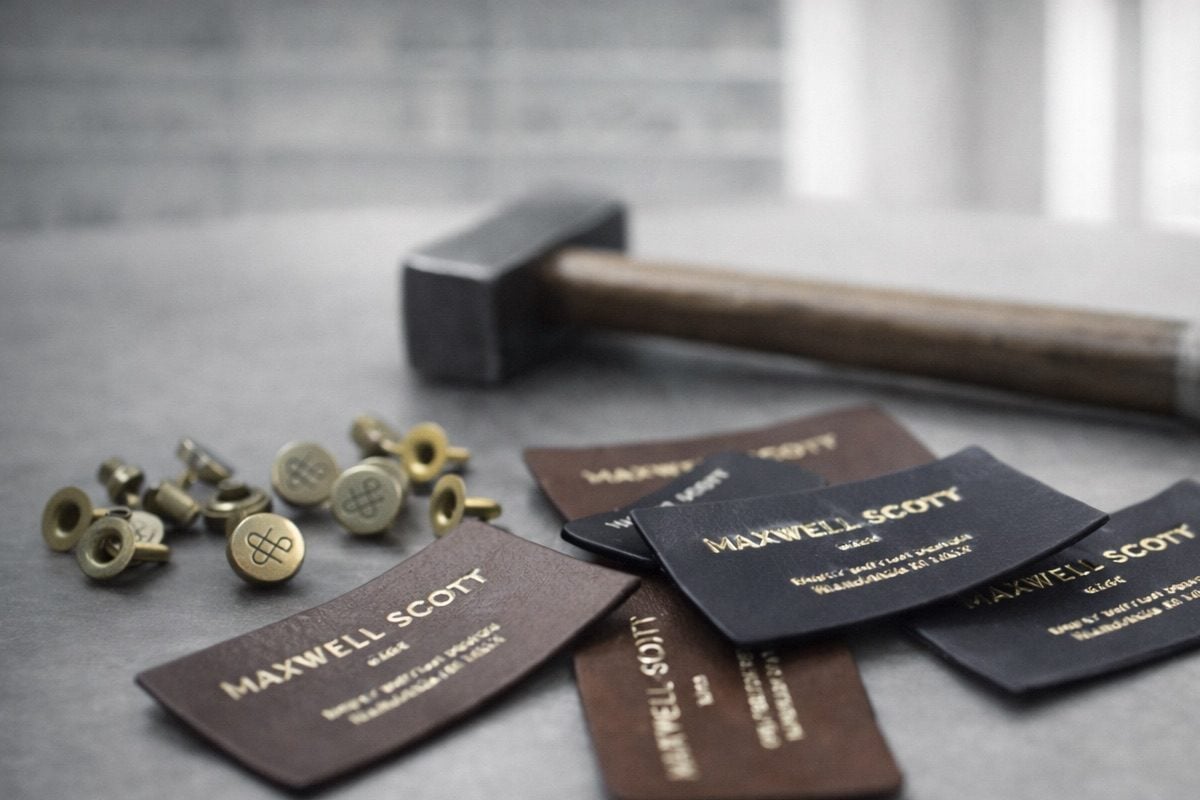
Uses metallic foil for contrast and visual emphasis. Often seen in formal or statement designs.
At Maxwell-Scott, we primarily favour blind embossing, as it complements the natural character of fine leather, allowing texture, grain, and patina to take centre stage.
Why Fine Embossing Lasts for Decades
Exceptional embossing begins with exceptional materials.
Vegetable-tanned, full-grain leather retains open fibres that respond naturally to heat and pressure, allowing impressions to embed deeply and permanently. Over time, embossed marks age gracefully, softening slightly while remaining clearly legible.
This longevity ensures embossed branding never cracks, flakes, or fades, preserving refinement throughout decades of use.
The Art of Embossed Ownership
Embossing is more than branding. Artisans also use embossing as a quiet declaration of identity.
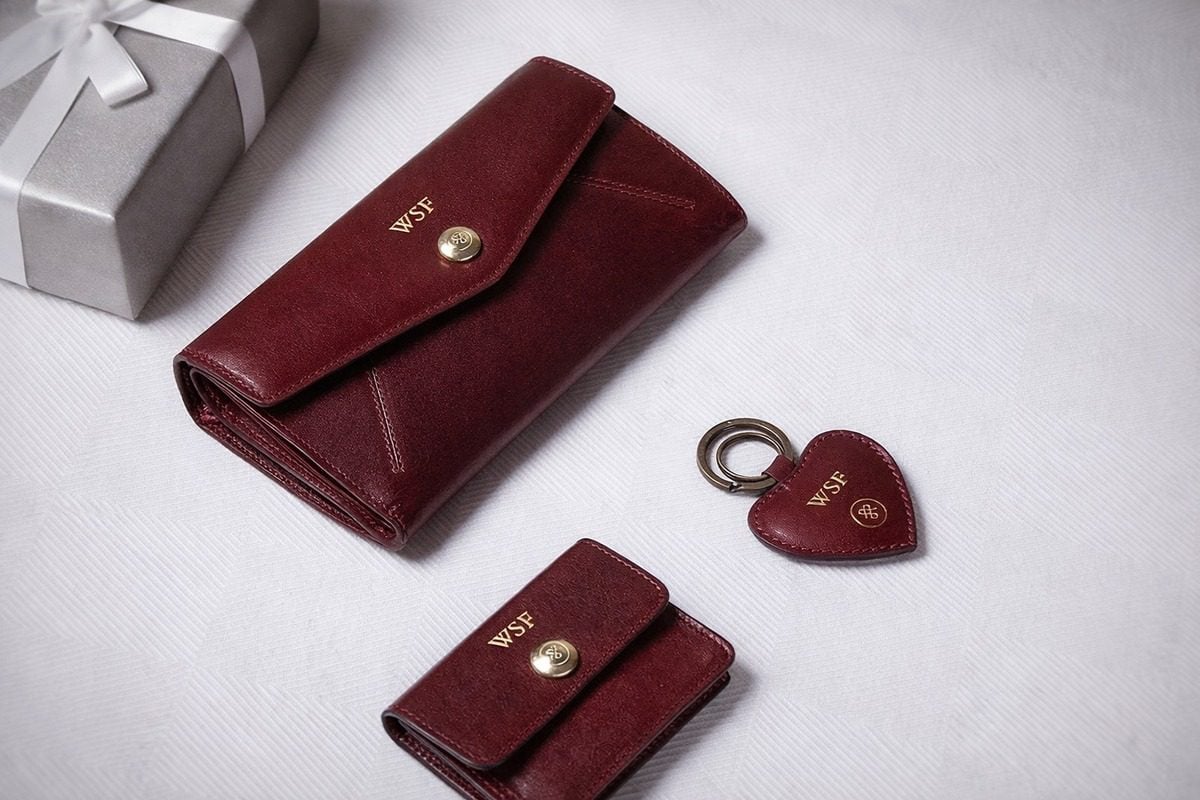
Whether marking craftsmanship, heritage, or personalising with initials or a memorable date, each embossed detail reflects a bond between maker and owner, transforming an accessory into a deeply personal possession.
Moreover, it is one of the many subtle elements that elevate everyday function into enduring luxury.
Crafted for the Long Haul
Furthermore, our embossed finishes are designed to complement leather that evolves beautifully over time. As patina develops, embossed marks soften gently, integrating seamlessly into the surface, a hallmark of exceptional leather ageing.
Whether carried daily for business or across continents for travel, each embossed detail remains a testament to refined craftsmanship.
Craft Library
Discover the stories, processes and materials behind our leather goods, from tanning to patina and the artisans who bring each piece to life.